Having your Djibouti eVisa rejected is usually the result of simple, fixable errors such as incorrect passport details, missing supporting documents, or failed payments. Identifying the exact reason for refusal lets you correct the issue and reapply with confidence.
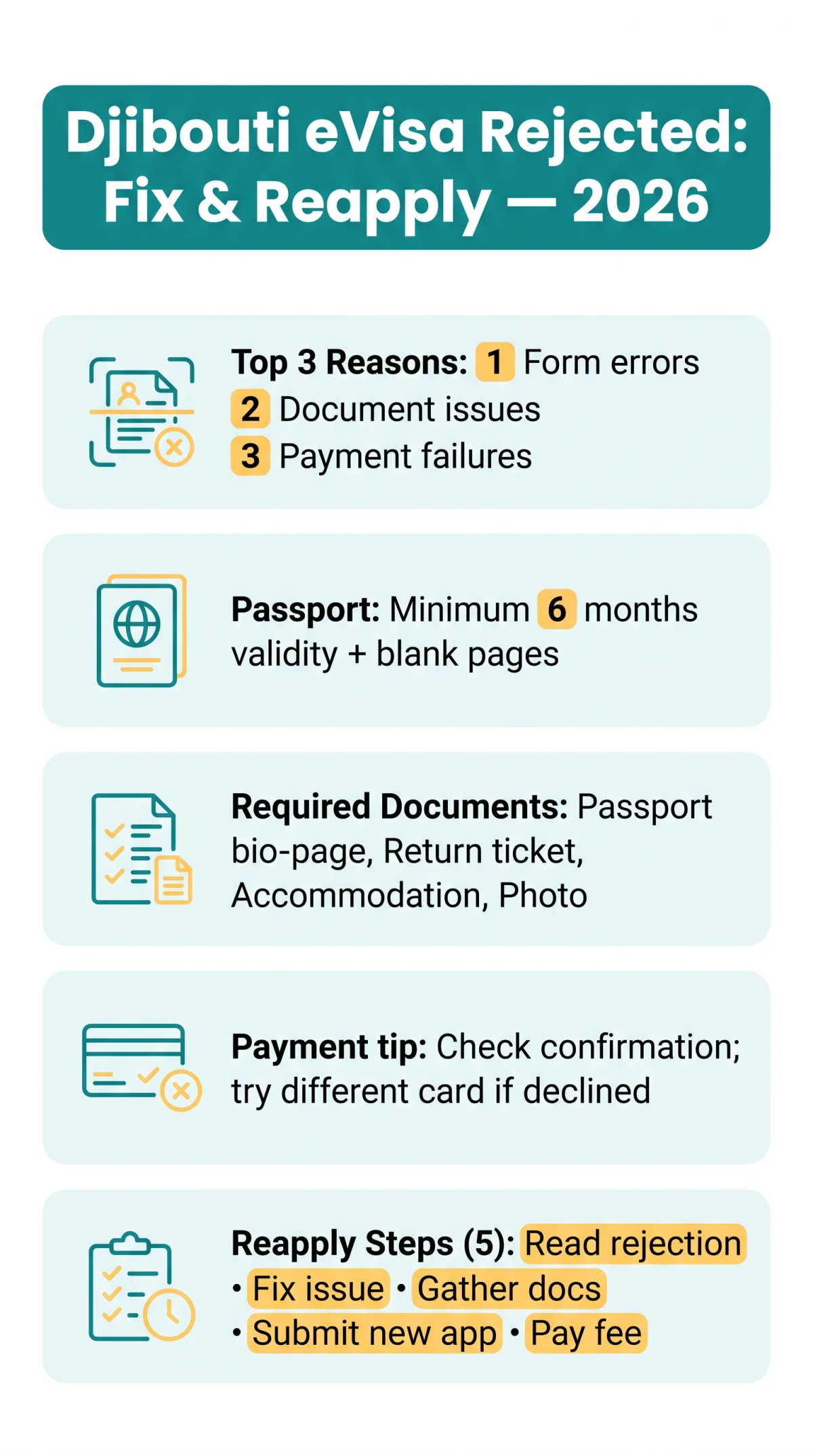
The three rejection clusters below – form errors, document issues, and payment failures – account for nearly all Djibouti eVisa refusals. Fix the specific cause and reapply. The full reapplication process is covered below.
Last reviewed: September 2026. Visa requirements change frequently; always confirm current rules on the Government of Djibouti eVisa portal at evisa.gouv.dj (external source) before submitting an application. This article is for informational purposes only and does not replace government advice.
Top Reasons Your Djibouti eVisa Gets Rejected
A Djibouti eVisa refusal most often traces back to a small set of preventable mistakes reported by UK travellers. These five causes are the most frequently reported; the rejection email itself remains the authoritative source for your specific case.
- Application form errors: Typographical mistakes in your name or a passport number mismatch between the form and your scanned document frequently trigger a Djibouti eVisa rejected outcome. In one tracked case, a UK applicant was refused because the name on their passport differed by a single character from the eVisa form; after correcting it, the reapplication was approved within 48 hours.
- Passport validity under 6 months: Passports expiring within six months of your intended travel date are a leading technical cause of refusal.
- Missing or illegible supporting documents: Blurred scans, partial uploads, or incorrect photo formats lead the eVisa system to flag and deny applications.
- Travel itinerary gaps: Mismatched dates between your application and your return booking raise questions about your planned stay.
- Instant approval misconception: eVisa approval is not automatic or instant; each application undergoes review, and assuming otherwise leads travellers to submit incomplete forms.
Passport and Document Requirements You Must Meet
Most refusals come from passport or document errors. Your passport and supporting documents are the most scrutinised part of the application.
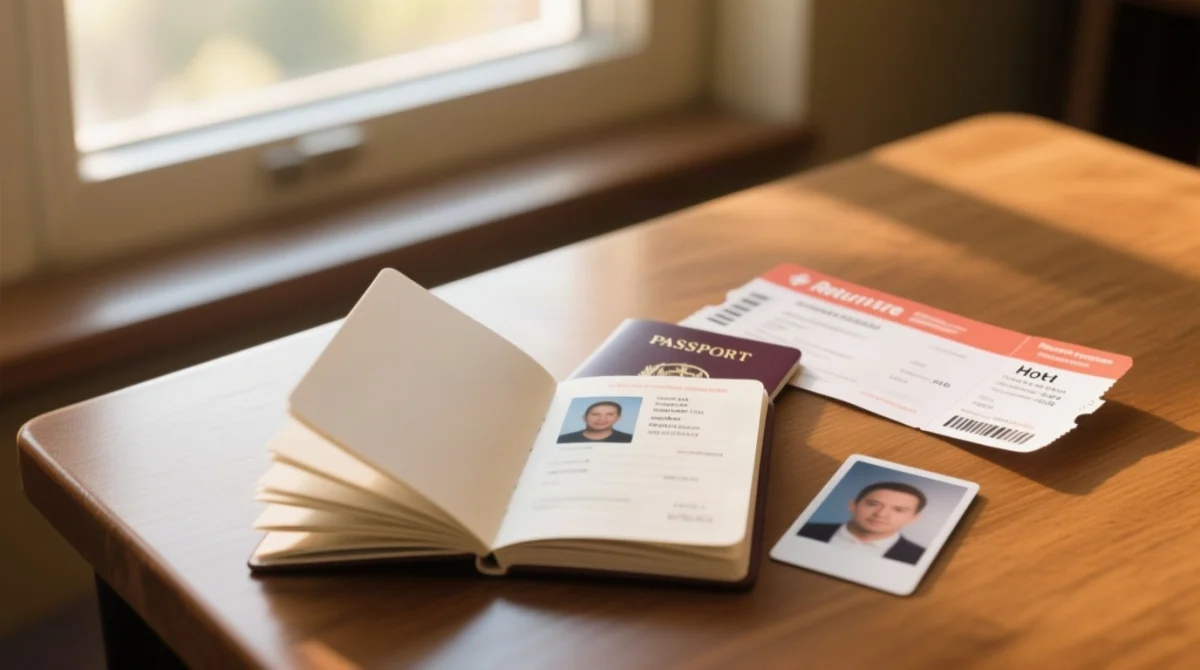
| Requirement | Rule | Common Error |
|---|---|---|
| Passport validity | Minimum 6 months validity from entry date | Submitting a passport expiring within six months |
| Passport scan quality | Clear, full page, no glare | Partial scan or cropped edges |
| Passport bio-page completeness | All biographical details fully visible | Photo or data fields cut off |
| Return ticket proof | Confirmed onward or return booking | One-way ticket with no exit proof |
| Accommodation confirmation | Hotel or host booking matching travel dates | Dates mismatched with visa application |
| Passport-size photo | Recent, compliant specifications | Incorrect background or outdated photo |
UK passport holders must also ensure their passport contains enough blank pages. A Djibouti eVisa refusal frequently stems from this overlooked requirement, so verify your document before reapplying.
Payment Failures and Technical Issues
A Djibouti eVisa rejection is not always a refusal on eligibility grounds. A significant number of negative outcomes are payment or system errors disguised as denials. UK cards are frequently declined by issuing banks when processed through foreign payment gateways, and currency conversion blocks can prevent the transaction from completing at all.
Insufficient funds, duplicate submissions, and browser cache issues also cause false rejections. Duplicate submissions cause system conflicts that void both applications; wait for a decision before resubmitting. Browser and cache issues may corrupt the upload of supporting documents, leading the portal to flag the application as incomplete.
Check your email: a payment confirmation versus a rejection notice tells you whether the application was ever processed. If the payment failed, the system likely never reviewed your submission. Trying a different card or payment method on a fresh browser session may resolve it immediately.
How to Avoid Rejection: Pre-Application Checklist
A Djibouti eVisa refusal is preventable when you prepare and check every detail before submission. Following this checklist helps you avoid the most common rejection triggers flagged by the immigration portal.
Verify passport validity
Ensure 6+ months validity beyond your travel date and blank pages available.
Prepare passport scans
Clear bio page copies with no cut edges and all text legible.
Confirm return flight
Booking dates must match your application form exactly.
Secure accommodation proof
Hotel reservation covering your entire stay in Djibouti.
Double-check form fields
Compare against your passport character by character before submitting.
Use stable connection
Supported browser to prevent session timeouts.
Screenshot confirmation
Capture the confirmation page immediately after submission for your records.
Verify payment
Ensure your payment went through before closing the browser.
This checklist prevents the most common refusals.
Steps to Reapply After a Djibouti eVisa Rejection
If your application was denied, you can reapply, but only after identifying and fixing the specific issue that caused the Djibouti eVisa refusal. A previous rejection does not automatically bar you from submitting a new application.
Read the rejection email
Understand the exact reason stated for the refusal.
Check the status portal
Look for any additional details not included in the email.
Fix the identified issue
Correct form data, poorly scanned documents, or failed payment.
Gather corrected documents
Have everything ready before starting a new submission.
Submit a fresh application
Through the eVisa portal, not an edit of the old one.
Pay the visa fee again
The previous payment is not carried over.
Monitor your email
Wait for the new decision.
Refunds, Appeals and Alternative Visa Options
A Djibouti eVisa refusal raises immediate practical questions about money, recourse and fallback plans for UK travellers. Visa fees are typically non-refundable even when an application is denied, so expect to lose the processing cost regardless of the outcome.
The Djibouti eVisa system generally does not offer a formal appeal process. Reapplication through the same electronic portal remains the standard route after a Djibouti eVisa rejection, provided the original refusal reasons have been corrected.
If repeated eVisa attempts fail, applying for a traditional visa through a Djibouti embassy or consulate is the primary alternative. Contact the nearest Djibouti embassy or consulate (London is the primary UK mission) to confirm whether paper visas are issued and what documents they require.
Regarding travel insurance, many standard UK policies exclude refused visa applications as a cancellation trigger. Review your policy wording and contact your insurer directly before booking non-refundable travel arrangements.
FAQ: Djibouti eVisa Rejections and Reapplying
Why was my Djibouti eVisa rejected?
The most common causes are form errors (misspelled names, passport number mismatches), insufficient passport validity under 6 months, missing or illegible documents, or failed payments. Your rejection email specifies the exact reason for your case.
Can I reapply for a Djibouti eVisa after rejection?
Yes. Identify the refusal reason, correct it, gather all required documents, ensure your payment method works, and submit a fresh application through the eVisa portal.
How long should I wait before reapplying for a Djibouti eVisa?
There is no mandatory waiting period. Once you have corrected the error, you can submit a new application immediately. Ensure all information is accurate before reapplying.
Will I get a refund if my Djibouti eVisa application is rejected?
Visa fees are typically non-refundable even when an application is denied. Check the terms and conditions on the Government of Djibouti eVisa portal at evisa.gouv.dj (external source) for specific refund information related to your case.
Can I appeal a Djibouti eVisa rejection decision?
The Djibouti eVisa system generally does not offer a formal appeal process. If an appeal option is available, it will be mentioned in your rejection notice. Otherwise, correct the identified issue and submit a fresh application.
What passport validity is required for a Djibouti eVisa?
Your passport must have a minimum of 6 months validity from your entry date and sufficient blank pages. Verify the current requirement on the Government of Djibouti eVisa portal before applying.
What documents do I need to reapply for a Djibouti eVisa?
Gather every document specified in your rejection notice: passport bio page scan, return ticket proof, accommodation confirmation, and passport-size photo. Ensure each is legible, correctly formatted, and consistent with your application form.
Can UK travellers get a Djibouti visa from an embassy instead of online?
Yes. If your eVisa application is repeatedly rejected, applying through a Djibouti embassy or consulate is a viable alternative. Contact the nearest Djibouti diplomatic mission in London for details on availability and requirements.